Collection Details

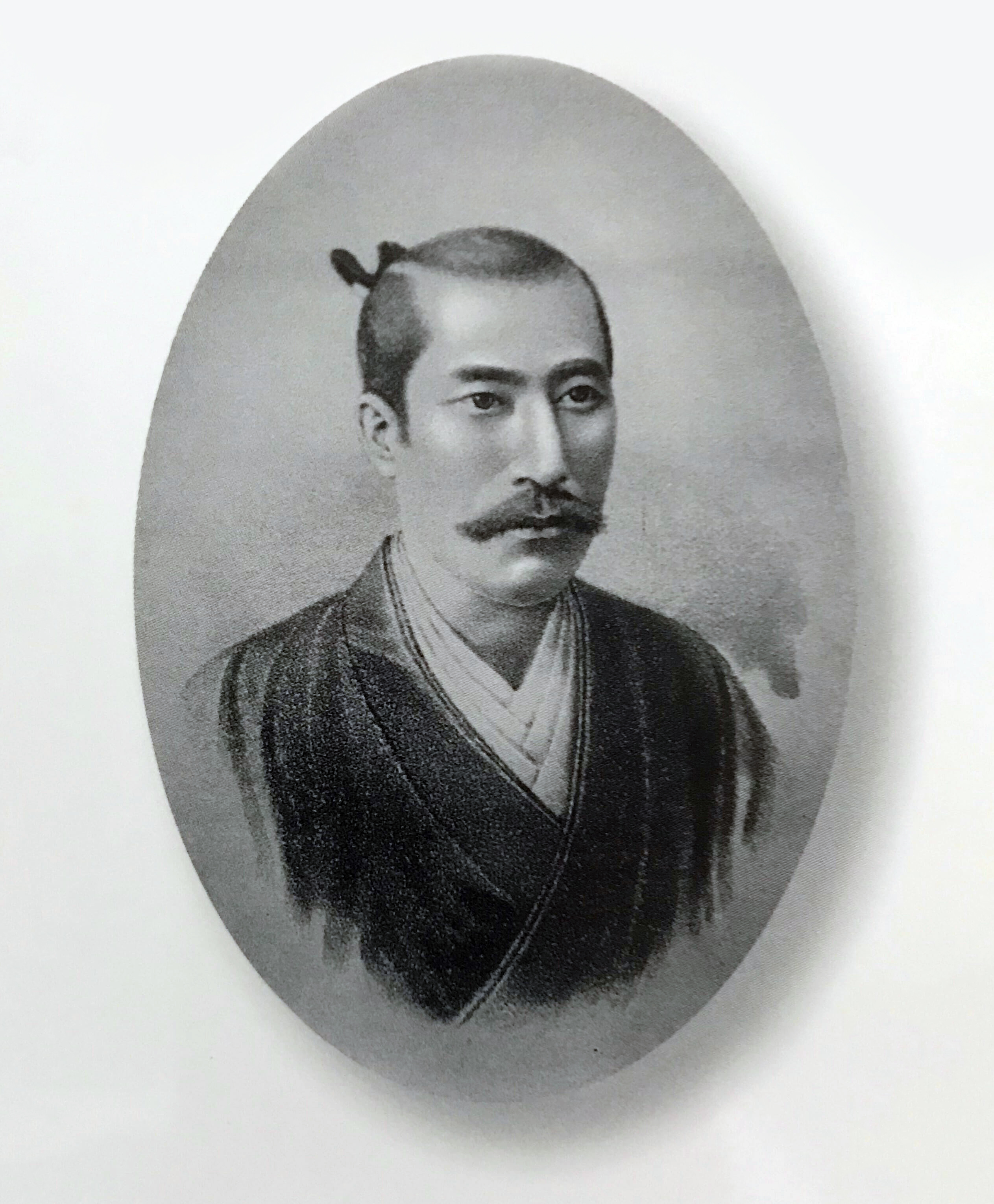
After Nobunaga’s death, a detailed painting was said to have been created by a Jesuit missionary at the request of Oda Nobunaga’s second son Oda Nobuo sometime between 1585-87. Although the exact time and painter is unknown, some studies and pointed to Giovanni Nicolao who was Itlaian Jesuit painter in the same company of Francis Xavier that travelled to Japan and met Oda Nobunaga. Giovanni was teaching painting techniques to the Japanese at a seminary (Christian school) for 32 years, from 1583 to 1614.

The memorial portrait is preserved at Sanpo-ji Temple (located in Tendo City, Yamagata Prefecture), which serves as a family temple for descendants of Nobunaga’s second son, Nobuo, who was were transferred in the late Edo period. The Oda family has passed down the tradition that this painting most closely resembles Nobunaga. The original is said to have been lost in a fire but thankfully in the Meiji era, copies were created by Takeo Otake, a court photographer from the Tendo Oda domain and distributed among the Imperial Household Agency, the Oda family, and Sanpoji Temple.

Oda Nobukane, Nobunaga’s full brother is thought to have served as a stand-in model for Nobunaga’s portrait. In this painting, Nobunaga sports a magnificent Stalin-esque beard, contradicting Luis Frois’s report that he had “little beard.” His oval face, large, almond-shaped eyes, and prominent aquiline nose are similar to those of a portrait painted shortly after the death of his full sister, Oinu, who died of illness a few months after the Honnoji Incident.

Read more

Title

Posthumous Portrait of Oda Nobunaga (Oda Nobunaga Tsuizen no Shozoga)

Creator

Giovanni Nicolao (Unconfirmed)

Date

Original: 16th century Azuchi-Momoyama; Copies: 19th century, Meiji Era

Medium

Charcoal or conte crayon, silverpoint, etc. on Western paper

Physical Dimensions

Unknown (original lost)

Classification

Painting

Designation

Unspecified

Associated Names

Owner

Sanpoji Temple (Tendo City, Yamagata Prefecture)

Source

Source of Information: SOUZOU: Transcending Time and Space: 1000 Years of Portraiture  (https://www.shouzou.com/mag/mag2.html)


Display HISTORY

The information on the location and viewing of the item is subject to the owner and exhibitors and might not be current.
Posthumous Portrait of Oda Nobunaga
Painting

After Nobunaga’s death, a detailed painting was said to have been created by a Jesuit missionary at the request of Oda Nobunaga’s second son Oda Nobuo sometime between 1585-87. Although the exact time and painter is unknown, some studies and pointed to Giovanni Nicolao who was Itlaian Jesuit painter in the same company of Francis Xavier that travelled to Japan and met Oda Nobunaga. Giovanni was teaching painting techniques to the Japanese at a seminary (Christian school) for 32 years, from 1583 to 1614.

The memorial portrait is preserved at Sanpo-ji Temple (located in Tendo City, Yamagata Prefecture), which serves as a family temple for descendants of Nobunaga’s second son, Nobuo, who was were transferred in the late Edo period. The Oda family has passed down the tradition that this painting most closely resembles Nobunaga. The original is said to have been lost in a fire but thankfully in the Meiji era, copies were created by Takeo Otake, a court photographer from the Tendo Oda domain and distributed among the Imperial Household Agency, the Oda family, and Sanpoji Temple.

Oda Nobukane, Nobunaga’s full brother is thought to have served as a stand-in model for Nobunaga’s portrait. In this painting, Nobunaga sports a magnificent Stalin-esque beard, contradicting Luis Frois’s report that he had “little beard.” His oval face, large, almond-shaped eyes, and prominent aquiline nose are similar to those of a portrait painted shortly after the death of his full sister, Oinu, who died of illness a few months after the Honnoji Incident.

Read more
/
/
/
Posthumous Portrait of Oda Nobunaga